
The garage startup is the founding myth of modern technology. Every ambitious company wants one in its origin story — the scrappy beginning, the folding table, the idea too big for the room it was born in. But most of those garages are metaphors. There is, however, one actual garage, a modest one-car structure at 367 Addison Avenue in Palo Alto, where the whole template was genuinely invented. In 1939, two Stanford engineering graduates named Bill Hewlett and Dave Packard pooled roughly $538 and started building electronic instruments there. They flipped a coin to decide whose name came first. That garage is now, officially, a California landmark known as the “Birthplace of Silicon Valley” — and the reason its story still matters has nothing to do with nostalgia. It’s that the tools you build with quietly shape what you’re able to build at all. Give a curious person the right instrument and they will make things they could never have made without it; that was true of a hand-built oscillator in 1939, and it is just as true of the laptop open in front of you now.
The Garage That Started Everything
HP’s first product set the tone: an audio oscillator, a piece of test equipment so good that Walt Disney’s studio bought a batch to help engineer the sound for Fantasia in 1940 — the order that effectively launched the company. From that bench grew calculators, printers that put publishing on ordinary desks, and the personal computers that landed on millions of them. More than eight decades later, after a 2015 split that left HP Inc. carrying the PC-and-printing business forward, the through-line hasn’t changed. HP has always made tools for people who make things — and the spirit of two engineers tinkering in a garage is still, improbably, the most honest description of what the company is for. Think about what those printers alone unlocked: suddenly a kid with an idea could lay out a magazine, a founder could print a pitch, a teacher could hand out something they’d designed themselves. That is the quiet pattern of HP’s best work — taking a capability that used to belong to institutions and handing it to the individual. The garage didn’t just start a company; it started a habit of democratising the tools of creation.
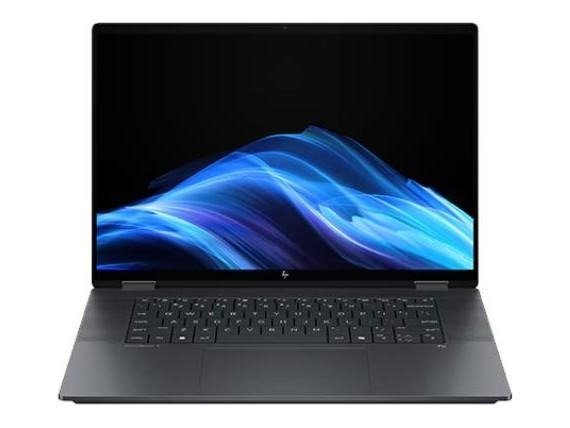
Tools for Whatever You’re Making
That’s the right way to shop its range, too: not by chasing the flashiest launch, but by asking what you’re trying to make. HP recently simplified a sprawling, decades-old lineup into a handful of clear ideas. OmniBook is the everyday line — the laptop for writing, studying, editing a photo, running a small business, living a whole digital life — and it now absorbs the old Spectre, Envy and Pavilion names under one roof. OMEN (with its more accessible sibling Victus) is built for gamers and anyone who needs serious graphics muscle. And EliteBook is the workhorse for professionals who live in meetings, spreadsheets and travel. Three honest questions — everyday, play, or serious work — map almost perfectly onto three honest answers. Within each family there’s room to go further — a convertible that folds back into a tablet for sketching or reading, a thin-and-light for the commuter, a desktop-grade machine for the person who really pushes their hardware — but the top-level choice stays refreshingly simple. The right tool doesn’t just do the job; it makes the job feel possible, and it quietly removes the small daily frictions that otherwise talk you out of starting.

Buy for the Work, Not the Hype
From there, the old wisdom holds: buy for the work, not the hype. A writer or student needs portability and a battery that lasts the day far more than a spec-sheet trophy. A creator editing photos or video needs memory, a capable graphics chip and, above all, a genuinely good screen — the thing you stare at for hours. A gamer needs that graphics power turned up to the maximum. A few fundamentals cover almost everyone: aim for 16GB of memory or more so the machine doesn’t stall, a solid-state drive for speed, and a screen and keyboard you actually enjoy using. Weight decides whether it actually travels with you; the ports decide how much adapter-juggling you’ll tolerate; and a convertible earns its keep if you sketch, present or read as much as you type. Then buy slightly beyond today’s needs, because a good machine is a companion for four or five years of making, not a disposable purchase for this month’s project — and if money is tight, a well-specified model with enough memory will outlast a cheaper one that chokes the moment you open too many tabs.
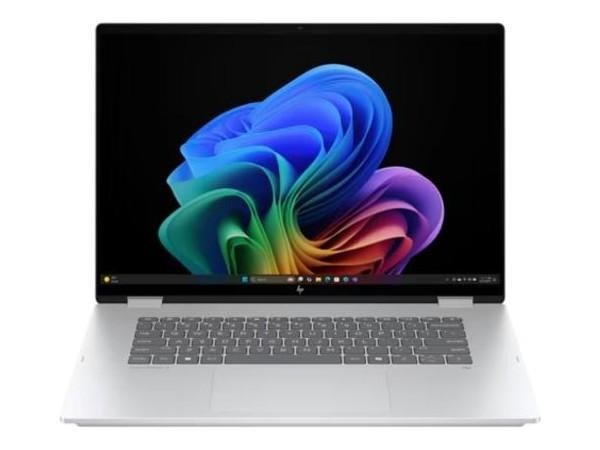
Build Without Wrecking the Planet
There’s one more thing the garage generation couldn’t have fully imagined, and it matters now: the cost of all this building to the planet. Electronics are one of the fastest-growing waste streams on earth, and this is an area where HP has genuinely led rather than followed. It was the first major manufacturer to build laptops using ocean-bound plastics — material intercepted from beaches and waterways before it could reach the sea — and it now weaves recycled plastics and metals through its products, backed by recycling programs that take old hardware back rather than letting it rot in a landfill. For anyone who takes the maker ethos seriously, this is part of the craft, not a footnote to it. Building something good shouldn’t require quietly breaking something else. A machine designed to be repaired and upgraded rather than thrown away, built partly from material that would otherwise have choked a coastline, is simply a better object — and choosing one is a small vote for an industry that cleans up after itself. The most admirable tools are the ones made with some thought for what happens after they’re switched off for the last time, and that foresight costs the person buying them nothing but a moment’s attention.
Go Build Something
In the end, the garage was never really about the garage. It was about a particular stubborn belief — that two people with a bit of money, a lot of curiosity and the right equipment could build something that mattered. That belief didn’t stay in Palo Alto; it spread into dorm rooms and bedrooms and kitchen tables all over the world, and it’s almost certainly why you’re reading this on a device at all. Whatever you’re making — an essay, a business, a game, a film, a life’s work assembled one evening at a time — the tool should get out of your way and let you get on with it. Pick the one that fits the work, treat it as the start of something rather than the end of a shopping list, and then do the only thing the garage ever really asked of anyone: go build something.
Disclosure: This article contains affiliate links. If you make a purchase through them, Urbanscut may earn a commission at no extra cost to you.