The boutique business in 2026 isn’t won on taste alone — it’s won on sourcing. With trends turning over in weeks and shoppers expecting newness every time they visit, the retailers who thrive are the ones who can find on-trend inventory fast, test it cheaply, and reorder what sells before the moment passes. The old way — flying to a trade show twice a year, or betting a whole season on one supplier — can’t keep that pace. The fix isn’t buying more. It’s sourcing smarter, from one place, all year round.
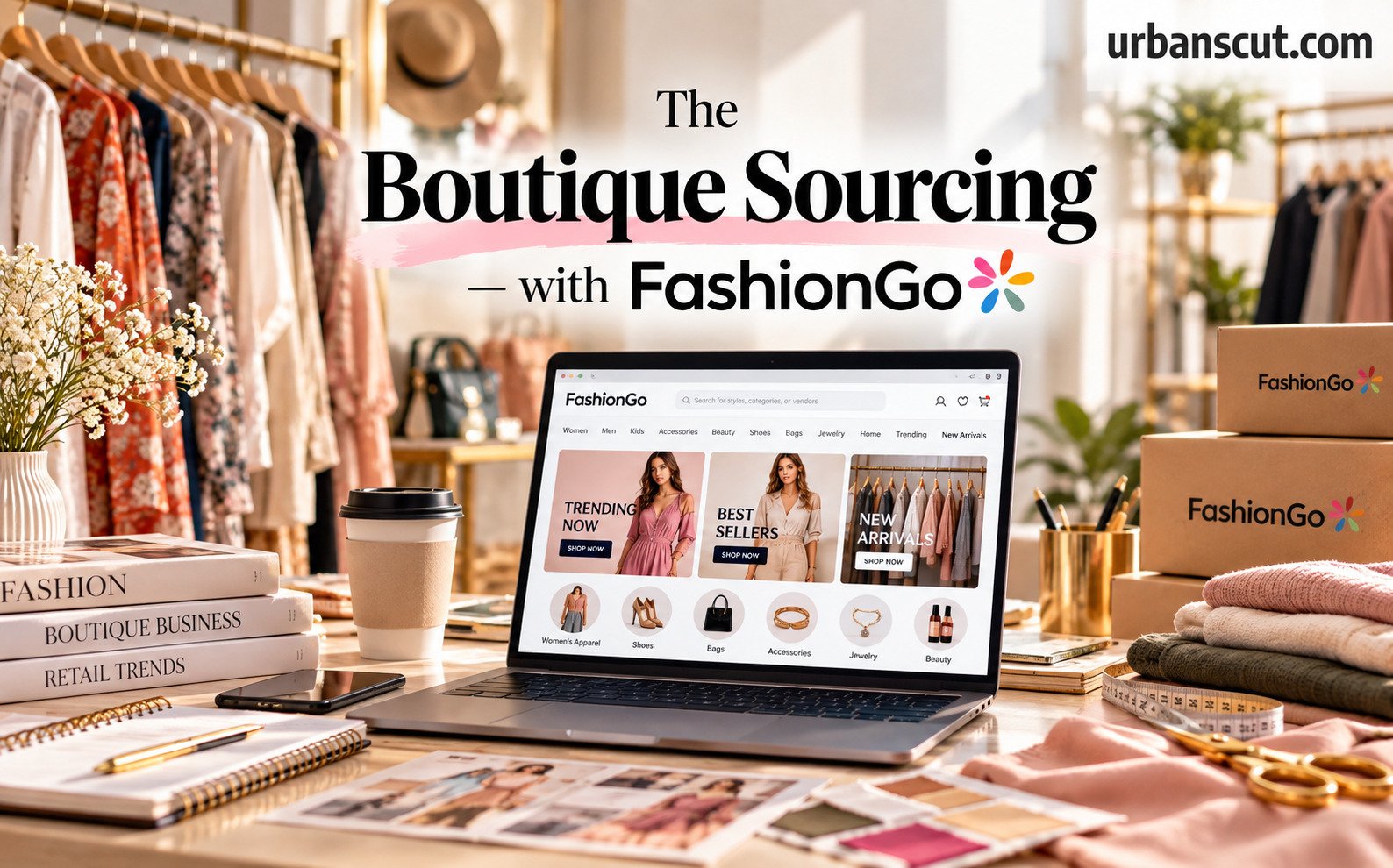
That’s precisely what FashionGo is built for. Launched in 2002 in the Los Angeles Fashion District and now part of NHN Global, it has grown into one of the world’s leading B2B wholesale fashion marketplaces — thousands of vendors and close to one million registered retailers trading across 11 categories, from women’s apparel, shoes and bags to jewelry, accessories, beauty, men’s, kids and home. Think of it as an always-open online trade show: one login, one cart, one checkout across hundreds of independent brands. The move that matters for new buyers is simple — register your business first, because wholesale pricing only unlocks once you’re verified. Here’s how to build a sourcing system around it.
Step 1: Audit Your Store, Not the Trend Feed
Before you add a single item to cart, chart what your store actually sells. Which categories move, at what price points, and how fast? That data is your buying plan: a boutique that sells dresses and sets at a $40–$70 retail sweet spot should source to that lane, not to whatever is viral this week. Write down your open-to-buy budget and your target margin first — every order below answers to those two numbers.
Step 2: Treat FashionGo as Your Always-Open Trade Show
The platform’s real advantage is breadth in one place. Instead of chasing a dozen supplier sites, you browse hundreds of vendors through a single catalog — sort by Trending and Best Sellers, use Style Match image search to find a look-alike of a style that’s selling for you, and lean on curated edits like Kelly’s Cut to spot what’s rising. One session can replace a week of scattered sourcing.

Step 3: Respect the Two Non-Negotiables
Two things take zero shortcuts in wholesale. First, business verification — in most US states you’ll need a resale certificate and an EIN to unlock pricing and buy tax-exempt; it’s quick and inexpensive to obtain, and it’s what separates a real retailer from a window-shopper. Second, read each vendor’s terms — minimum order quantities, pack ratios and return windows are set per vendor, not by the platform, so check them before you commit rather than after.
Step 4: Buy Small, Then Scale What Sells
The smartest buyers treat FashionGo as a low-commitment testing lane. Order close to each vendor’s minimum across several brands — a sensible first haul is often $300–$900 spread over multiple vendors, not one big bet — then let the register decide. Reorder only the styles that clear a 1.5x–2x resale multiple, drop the ones that don’t, and pour the budget into proven winners. Testing wide and scaling narrow is how boutiques grow without dead stock.
▶ SIGN UP TO SOURCE ON FASHIONGO
Step 5: Engineer Cash Flow — Net Terms and Free Shipping
Inventory is cash sitting on a shelf, so protect your cash flow. FashionGo’s Dynamic Net Terms let qualifying buyers pay up to 60 days later — so stock can start selling before the invoice is due — and free shipping kicks in on apparel orders over $300 (and accessories/jewelry over $100 at participating vendors). Consolidate smaller buys to clear those thresholds, and time orders so new stock lands, and sells, before payment comes due.
Step 6: Buy Smart — FASHIONGO WEEK, the App and a Reorder Cadence
Two habits compound the edge. First, build your calendar around FASHIONGO WEEK, the platform’s online trade-show events, where vendors drop newness and special deals — ideal for discovering brands and buying launch assortments. Second, run a tight reorder cadence through the app so best-sellers never go out of stock on your storefront, and because orders typically ship in 5–10 business days, you can restock inside a single selling week instead of waiting on factory lead times.

Three Mistakes This Playbook Prevents
First: buying on personal taste instead of store data — a rack of “I loved it” pieces that never sell loses to a tested assortment that does. Second: over-committing to one vendor or one trend before it’s proven — wholesale rewards testing wide and scaling narrow. Third: ignoring the tools that protect margin and cash — net terms, free-shipping thresholds and trade-show deals exist; skipping them is a voluntary tax on every season.
Final Thoughts
A boutique’s sourcing should mirror the way modern retail actually moves: fast, data-led and low-risk. Audit your real store, treat FashionGo as your always-open trade show, clear the two non-negotiables, test small and scale winners, and let net terms and trade-show timing fund the rotation. With thousands of vendors, close to a million retailers and a catalog that spans every category, FashionGo is built for exactly this buyer — the one who sources like a merchant, not a shopper.
▶ EXPLORE THE WHOLESALE RANGE AT FASHIONGO
Disclosure: This article contains affiliate links. If you make a purchase through them, Urbanscut may earn a commission at no extra cost to you.